
A LANDSCAPE BENEATH THE GREAT RIFT VALLEY
The setting is one of Lake Manyara’s greatest attractions. The steep wall of the Great Rift Valley rises dramatically above the park while the lake spreads across the lowlands below. Between the two lies a surprisingly varied collection of habitats. Dense groundwater forest near the entrance creates a cool, green beginning before the landscape gradually opens into woodland, floodplains and wetlands. This rapid transition means a relatively short game drive can take you through environments that feel completely different from one another.
WILDLIFE BETWEEN FOREST AND WATER
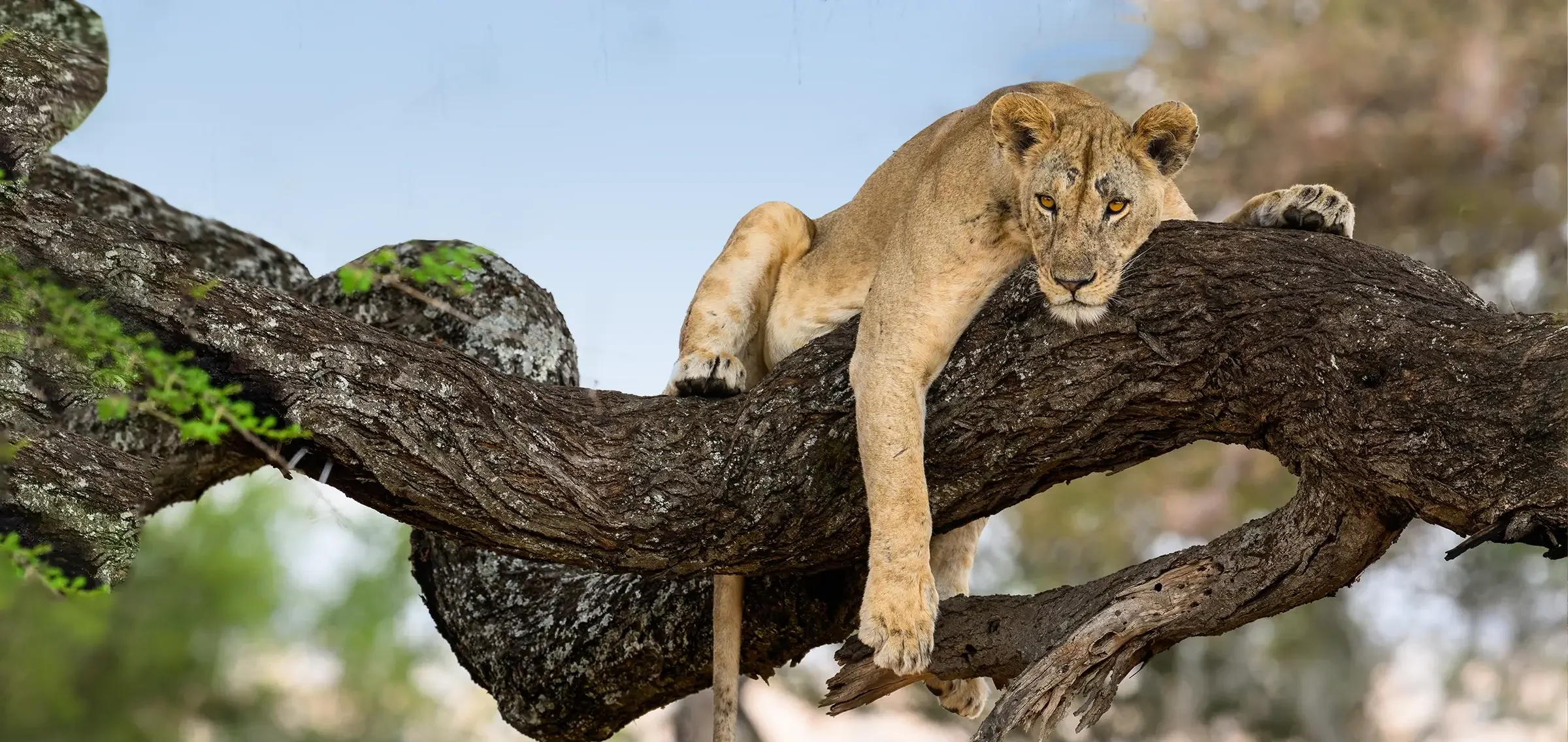
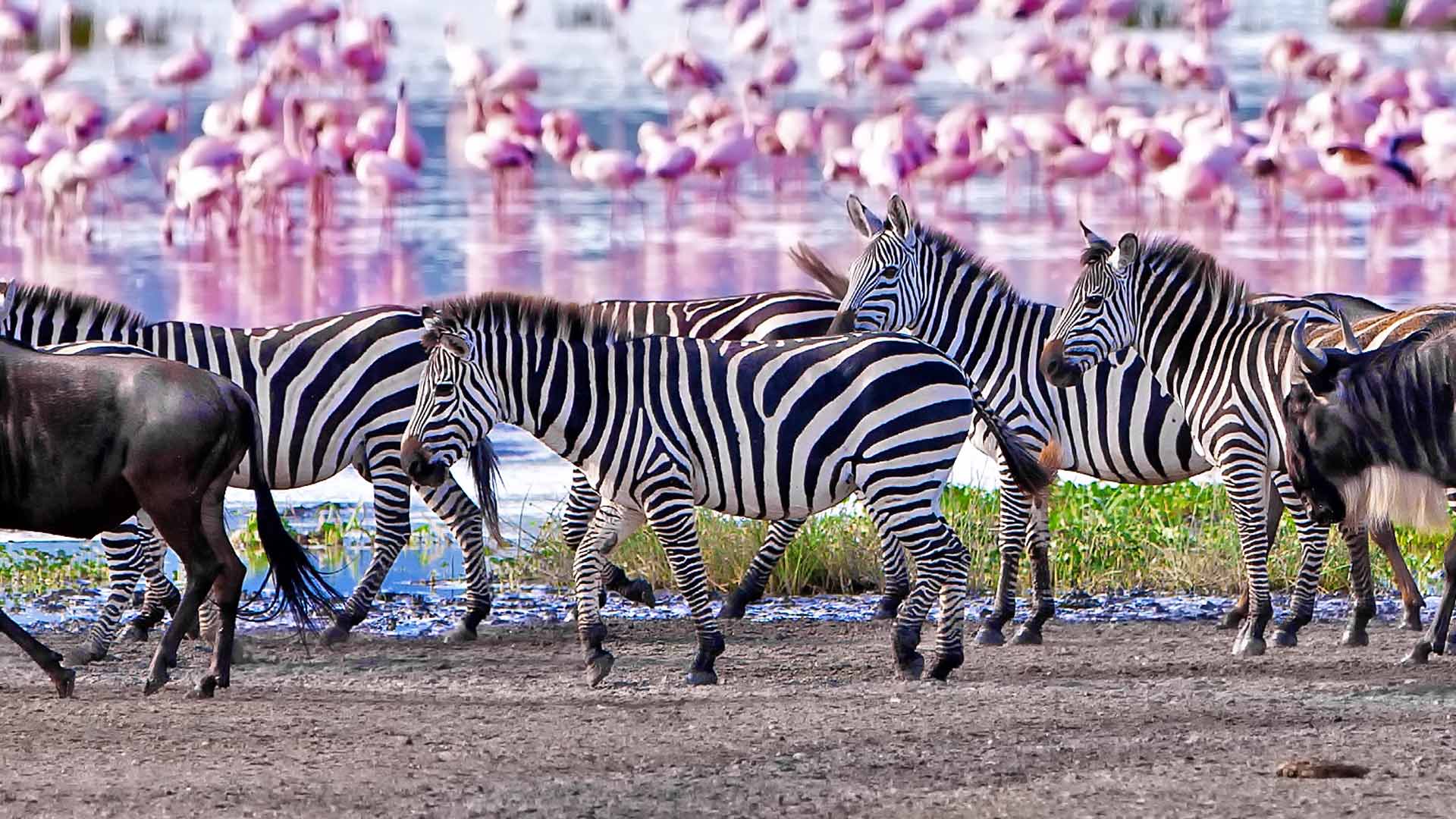
Lake Manyara’s wildlife experience is shaped by its diversity of habitats. Elephants are among the park’s most impressive residents and can sometimes be encountered moving quietly through thick vegetation. Giraffes, zebras, wildebeest, buffalo and several antelope species occupy the more open areas, while hippos spend much of their time around the wetlands. Large troops of baboons are particularly characteristic of Manyara, and blue monkeys can also be encountered in the forest. Lions live within the park too, including the population historically associated with the famous description of Manyara’s “tree-climbing lions,” although seeing lions resting in trees should always be treated as a fortunate wildlife encounter rather than a guaranteed attraction.
A PARK BUILT FOR BIRDLIFE
For bird lovers, Lake Manyara can become one of the most rewarding stops on the northern circuit. Its combination of lake, wetlands, forest, woodland and open country supports an impressive variety of bird species. Depending on water levels and seasonal conditions, the lake and surrounding wetlands can attract flamingos, pelicans, storks and numerous other waterbirds, while raptors and colourful woodland species occupy the surrounding habitats. Even travellers who arrive without binoculars tend to notice just how alive the sky, shoreline and forest canopy can be.
MORE THAN A GAME DRIVE
Lake Manyara works particularly well for travellers who want variety within their safari. A traditional game drive remains the main experience, but the wider Manyara area can also offer opportunities for activities such as walking, cultural visits, cycling or other locally operated experiences depending on the itinerary and current availability. This makes the destination useful for breaking up several consecutive days inside a safari vehicle and adding another texture to a longer northern circuit journey.
WHEN IS THE BEST TIME TO VISIT LAKE MANYARA?
Lake Manyara can be visited throughout the year, with each season creating a different atmosphere. The drier months generally make wildlife easier to spot around more open areas and permanent water, while the greener periods transform the park into an especially lush landscape and can be excellent for birdlife. Rainfall and changing lake levels can significantly alter the appearance of the park from one season to another, so Manyara should be appreciated as a dynamic ecosystem rather than a destination that looks exactly the same throughout the year.
HOW LONG SHOULD YOU SPEND AT LAKE MANYARA?
For most northern circuit itineraries, one full or half day can provide a rewarding introduction to Lake Manyara, particularly when travelling between Tarangire, Karatu and Ngorongoro. Travellers who want to include activities around the wider Manyara and Mto wa Mbu area may benefit from an overnight stay. Because the park is relatively compact, it works best as part of a broader journey rather than requiring several dedicated safari days for most first-time visitors.
LAKE MANYARA WITH WILDPACK
Manyara is a reminder that safari doesn’t always need an enormous horizon. Sometimes the interesting part is what happens when the landscape closes in. An elephant appearing between trees. Monkeys moving through the canopy. A hornbill crossing the road. The Rift Valley wall rising above everything. After days of wide-open savannah, Manyara changes the scale and gives the journey somewhere completely different to breathe.