
A LANDSCAPE CREATED BY FIRE
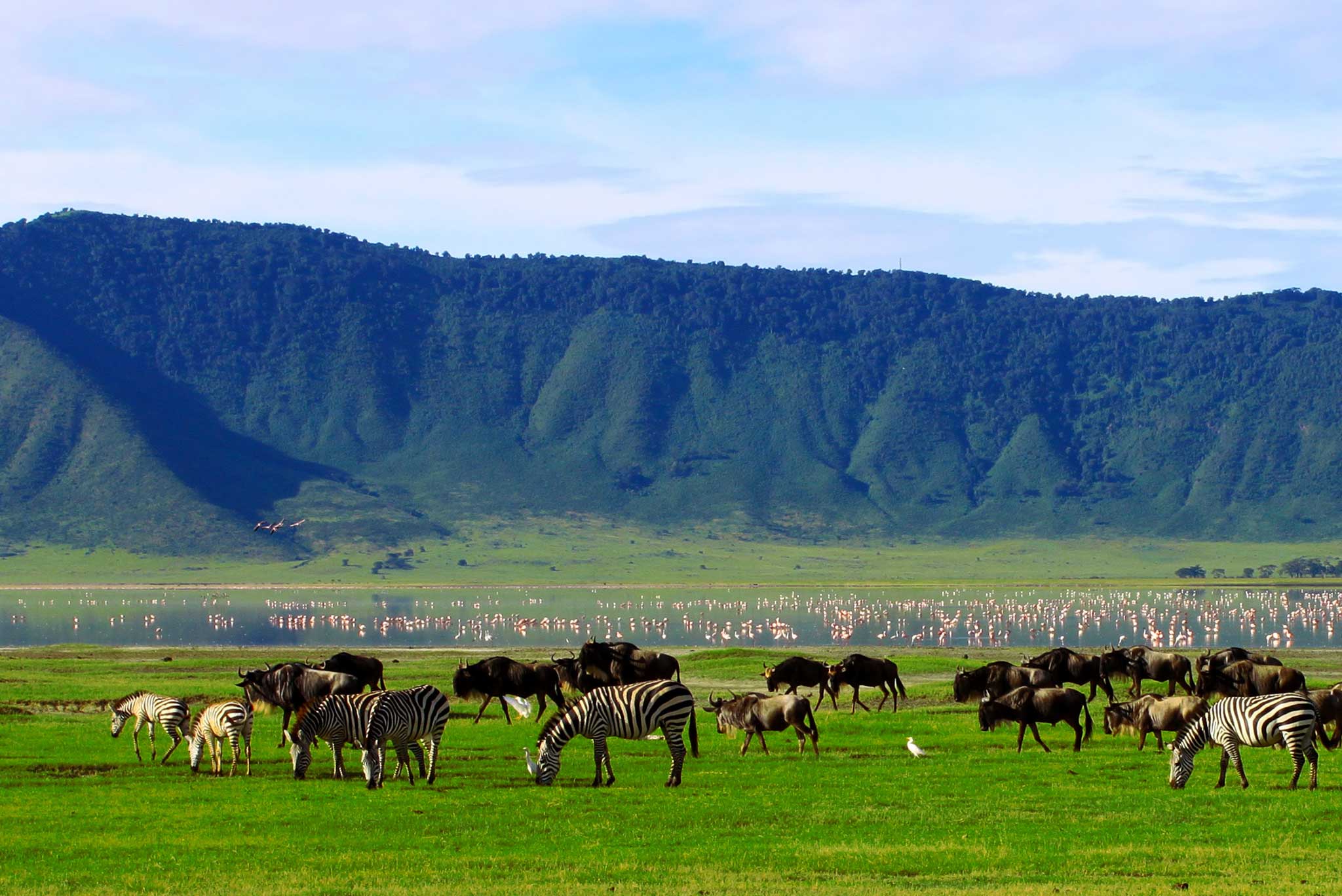
Ngorongoro’s story began millions of years ago with volcanic activity that shaped much of northern Tanzania. The enormous volcano that once stood here eventually collapsed, leaving behind the vast caldera visitors see today. The crater floor sits hundreds of metres below the rim and contains several distinct habitats within a relatively compact area, from open grassland and freshwater wetlands to acacia woodland and the alkaline waters of Lake Magadi. This concentration of habitats supports an equally impressive concentration of wildlife. Above it all, the crater rim rises into cool, often mist-covered highlands, creating one of the most dramatic transitions of any safari destination in Tanzania.
WILDLIFE IN THE CRATER
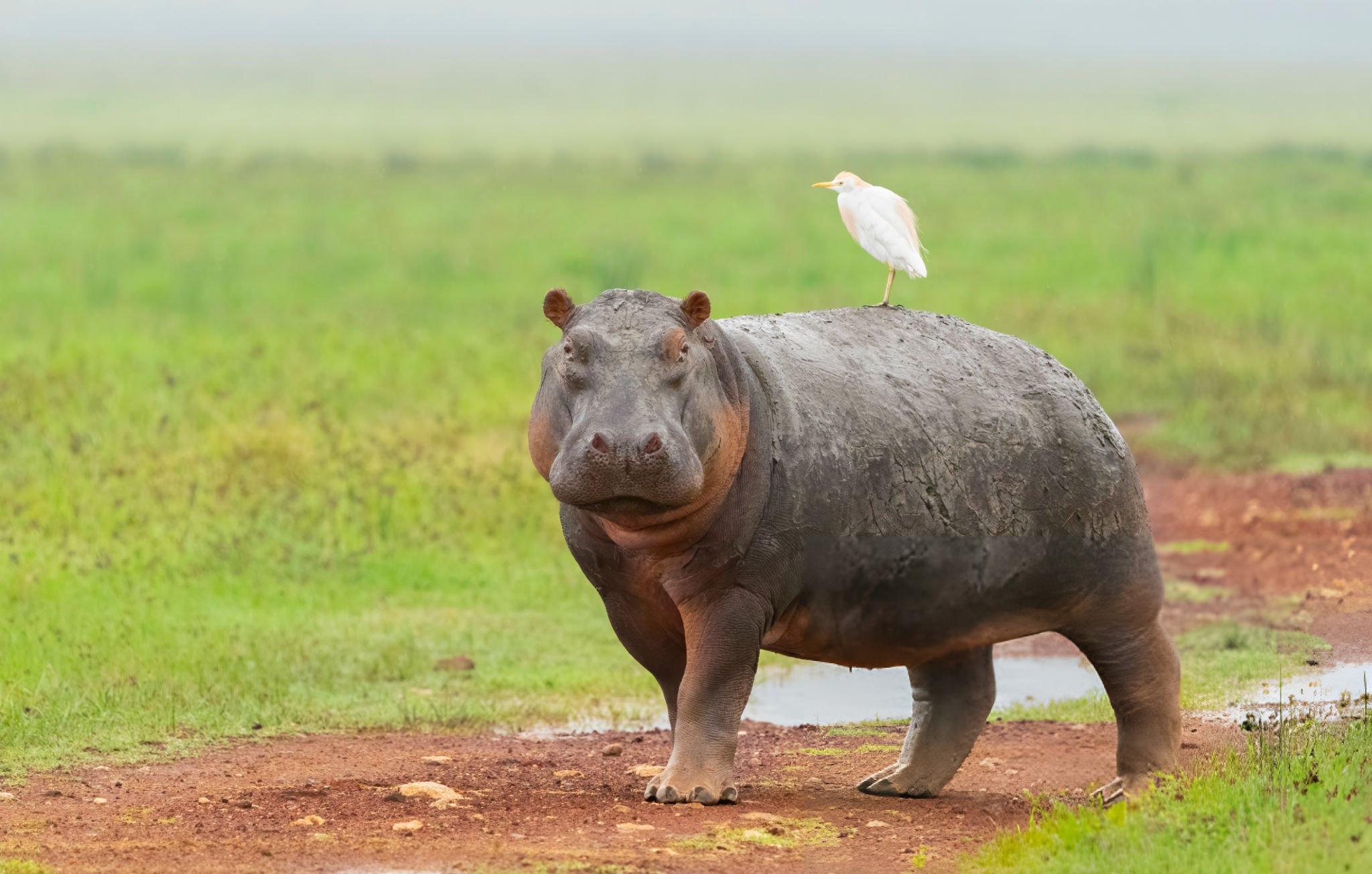
Ngorongoro is famous for offering excellent wildlife viewing within a comparatively concentrated area. Wildebeest, zebra, buffalo, gazelles and other grazers spread across the open floor, while lions patrol territories around the grasslands and wetlands. Spotted hyenas are particularly successful here, and elephants can often be encountered around woodland areas. Hippos occupy permanent pools, jackals move through the plains, and flamingos may appear around Lake Magadi when conditions are suitable. The crater is also one of the places in northern Tanzania where travellers may have an opportunity to see the critically endangered black rhinoceros, although sightings are never guaranteed. Leopards occur in the wider conservation area but are generally much less commonly encountered on the open crater floor.
MORE THAN THE BIG FIVE
It is tempting to reduce Ngorongoro to its famous wildlife checklist, but doing so misses much of what makes the place extraordinary. The experience begins before the first animal appears. Mist moves through the forests along the rim. Maasai cattle sometimes cross the wider highlands. Clouds break over the crater walls and send shafts of sunlight across the floor. Thousands of animals occupy the same landscape beneath you, predators and prey following routines far older than the safari vehicles watching them. Ngorongoro can deliver remarkable wildlife encounters, but its real power comes from seeing an entire ecosystem laid out within the walls of an ancient volcano.
THE NGORONGORO HIGHLANDS
The crater is the headline, but the surrounding highlands deserve attention of their own. The Ngorongoro Conservation Area forms a much larger landscape of volcanic mountains, grasslands, forests and traditional pastoral lands. Maasai communities live within parts of this conservation landscape alongside livestock and wildlife, making Ngorongoro culturally and ecologically different from a conventional national park. Roads wind through green hills and highland forests before descending toward the Serengeti plains, creating one of northern Tanzania’s most beautiful overland safari routes. For travellers with more time, the wider area can add walking experiences, cultural encounters and lesser-visited landscapes to the classic crater safari.
A DAY INSIDE THE CRATER
A typical crater safari begins early. From accommodation around the rim or nearby Karatu, your vehicle reaches one of the descent roads and begins winding down the crater wall. The temperature changes as you lose altitude and the forest gives way to open plains. Once on the floor, the day unfolds through grassland, marshes, woodland and lakeshore habitats, following wildlife rather than a rigid schedule. Lions may interrupt the morning. Elephants may pull you toward the forest. A distant rhino can suddenly turn binoculars into the most valuable object in the vehicle. Later, stop at an appropriate picnic area before continuing the game drive and eventually climbing back toward the rim. It is one of those rare safari days where the journey into the destination is almost as memorable as the wildlife waiting at the bottom.
WHEN IS THE BEST TIME TO VISIT NGORONGORO?
Ngorongoro is a strong year-round safari destination because much of its wildlife remains within or around the crater throughout the year. The drier months, broadly from June through October, generally offer cooler conditions and excellent game viewing, although they also attract more visitors. From November into the greener months, the landscape becomes increasingly lush and photographic, while the main rains usually occur during roughly March through May. Rain can occasionally make parts of a safari day slower or muddier, but the crater rarely stops being rewarding. Unlike migration-focused areas of the Serengeti, choosing when to visit Ngorongoro is less about finding wildlife and more about balancing weather, scenery and visitor numbers.
HOW LONG SHOULD YOU SPEND IN NGORONGORO?
For most travellers, one full crater game drive is enough to experience Ngorongoro’s principal wildlife area, especially when it forms part of a longer northern circuit safari. We normally recommend at least one night in the Ngorongoro or Karatu area so the crater does not become a rushed stop between Serengeti and Tarangire. Two nights make sense if you want a slower pace, highland activities or additional experiences beyond the crater floor. Ngorongoro works particularly well as a transition point within a safari because its compact wildlife experience contrasts beautifully with the immense scale of the Serengeti.
SERENGETI + NGORONGORO: TWO VERY DIFFERENT WILDS
Serengeti and Ngorongoro are often included in the same itinerary, but they should never feel interchangeable. The Serengeti is about distance, movement and horizons that keep escaping you. Ngorongoro is the opposite. It compresses the landscape. The crater walls surround you and wildlife gathers within a clearly defined geological world. Travelling between them gives you two completely different interpretations of northern Tanzania: one almost impossibly vast, the other dramatically contained. If you have enough time for both, don’t choose between them.
NGORONGORO WITH WILDPACK
We like Ngorongoro early. Before the day grows busy, when mist still hangs around the rim and the road begins curling toward the crater floor. Once you’re down there, there is no need to race from animal to animal. Follow what happens. Watch the hyenas interact. Stay with the elephants. Give the lions another ten minutes. And every now and then, look away from the wildlife entirely and back toward the crater walls. They are the reason this strange, beautiful world exists in the first place.