
BENEATH THE SHADOW OF MOUNT MERU
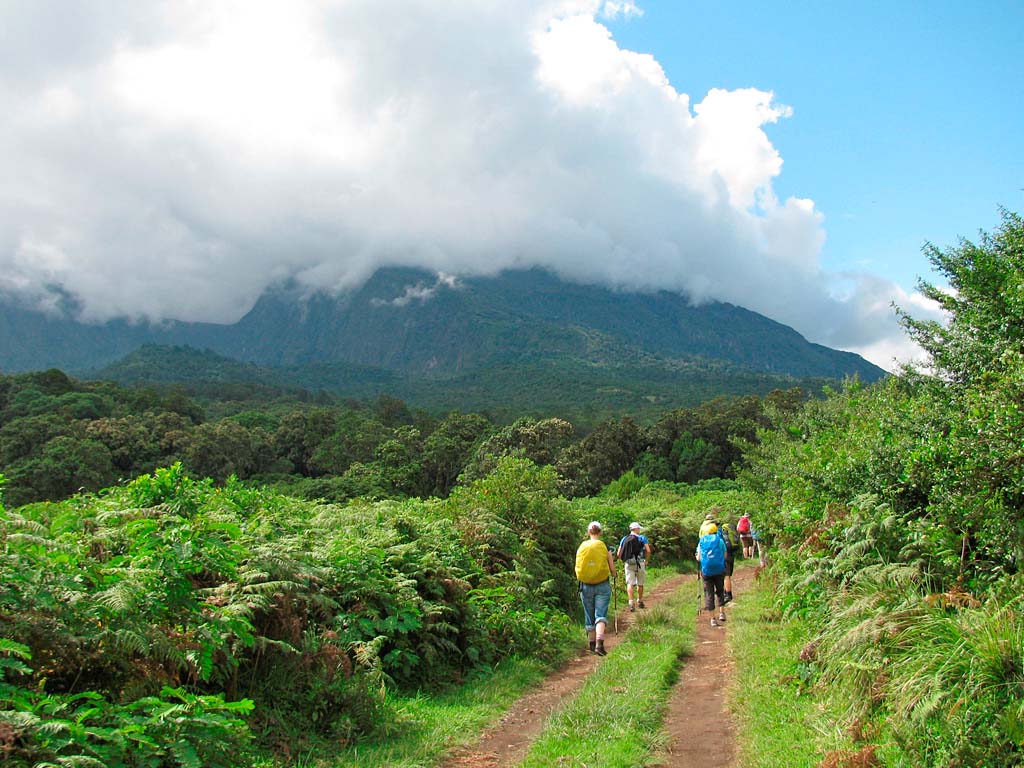
Mount Meru dominates the landscape of Arusha National Park. Rising to 4,566 metres, Tanzania’s second-highest mountain creates both a spectacular backdrop and much of the park’s ecological diversity. Its forested lower slopes receive enough moisture to support lush vegetation, while higher elevations transition through heath and alpine environments toward the volcanic summit. On clear days, Kilimanjaro may also appear in the distance, creating the unusual possibility of seeing Tanzania’s two highest mountains from the same landscape.
FOREST, CRATERS, LAKES AND OPEN PLAINS
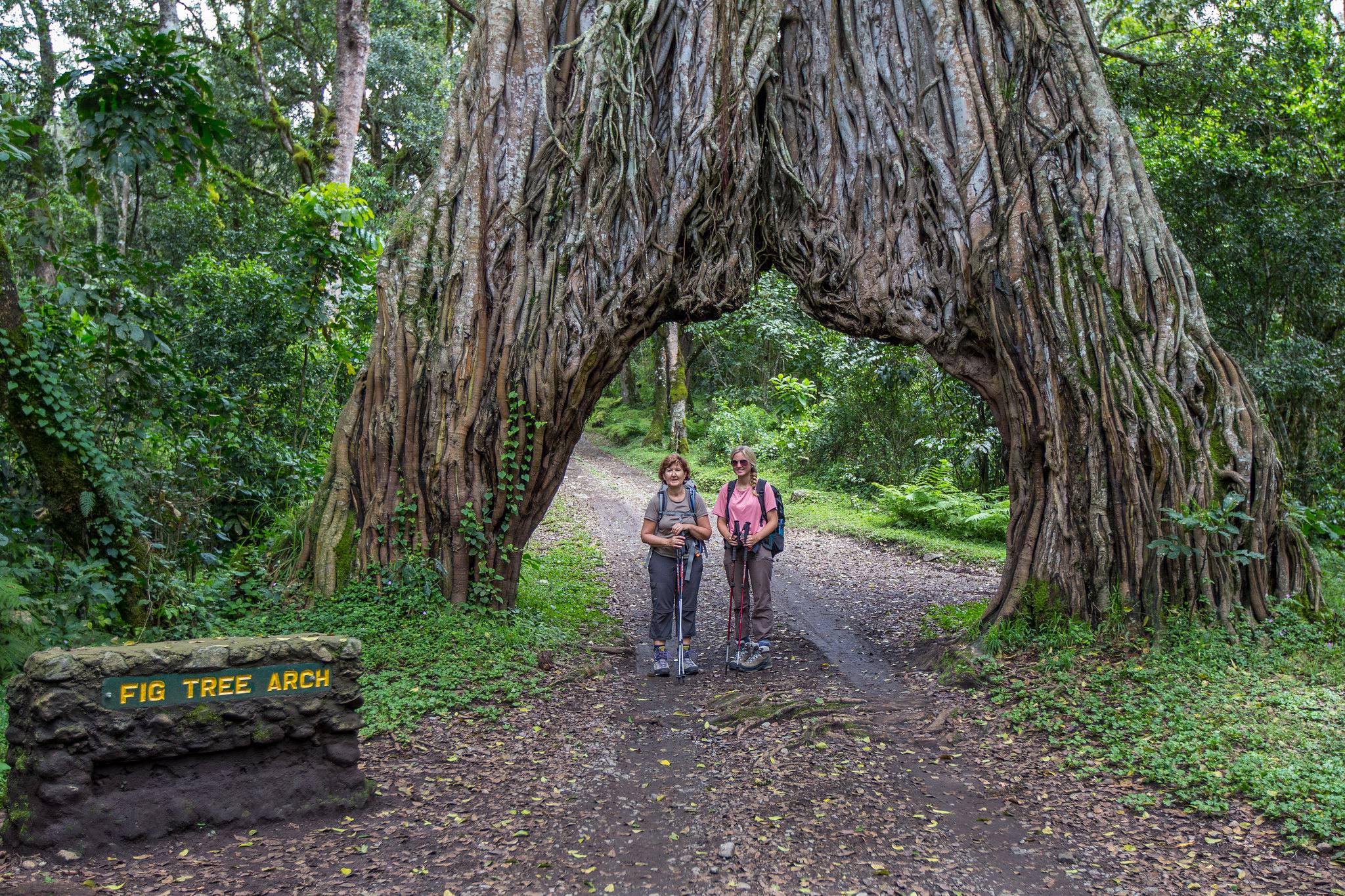
Few parks of this size change character as quickly as Arusha National Park. The forest around Mount Meru gives way to open grasslands and the volcanic Ngurdoto Crater, while the Momella Lakes introduce a completely different environment of shallow alkaline waters and surrounding wetlands. Moving through the park can therefore feel like travelling between several miniature ecosystems. One moment you’re beneath dense forest canopy listening for monkeys; the next you’re looking across open country toward giraffes with Mount Meru rising behind them.
WILDLIFE WITHOUT THE CROWDS
Arusha National Park does not offer the enormous concentrations of wildlife associated with Serengeti or Ngorongoro, and that is part of its appeal. The experience is quieter and more intimate. Giraffes are particularly characteristic of the park, while buffalo, zebra, warthogs, bushbuck, waterbuck and several smaller antelope species can also be encountered. Black-and-white colobus monkeys are one of the park’s signature sightings and are especially associated with its forested areas. Leopards and spotted hyenas occur but are elusive, while lions are not a regular feature of the park. Arusha is therefore best appreciated for its landscapes, primates, herbivores and active experiences rather than as a traditional Big Five destination.
WALK INTO THE WILD
One of the biggest reasons to include Arusha National Park is the opportunity to experience the landscape on foot.
Guided walking safaris take place with an authorised ranger and provide an entirely different relationship with the environment. Without the walls and height of a safari vehicle, you begin noticing smaller details: tracks in the earth, plants, insects, bird calls and the distance between you and a herd of giraffes.
Safari suddenly becomes less about how many animals you can find.
And more about where you’re standing.
For travellers beginning a longer northern circuit safari, this can be a brilliant first introduction to Tanzania’s wilderness.
THE MOMELLA LAKES
The Momella Lakes sit within the northeastern section of the park, a collection of shallow lakes whose colours can vary according to minerals, algae, light and seasonal conditions. Waterbirds are an important part of the landscape, and flamingos may occur when conditions are favourable. The lakes are framed by rolling hills and distant mountains, creating some of Arusha National Park’s most beautiful scenery. Canoeing may be available on designated waters depending on current park conditions and operating arrangements, offering yet another way to experience the landscape beyond a conventional game drive.
A DIFFERENT KIND OF SAFARI DAY
Arusha National Park is particularly useful for travellers who want their itinerary to contain more than continuous game drives. A day can combine driving through forest and open plains with a ranger-guided walk, scenic viewpoints or, where available, canoeing. Its proximity to Arusha also means you can experience a genuine national park without committing to a long transfer. This makes it an excellent choice for an arrival day extension, an extra day before travelling deeper into the northern circuit or a standalone day trip for travellers with limited time.
WHEN IS THE BEST TIME TO VISIT ARUSHA NATIONAL PARK?
Arusha National Park can be visited throughout the year. Drier periods generally provide easier trail conditions and clearer views, while greener months transform the forest and surrounding landscapes into particularly lush scenery. Mountain weather can change quickly, however, and Mount Meru or Kilimanjaro may disappear behind clouds even on otherwise pleasant days. For walking, photography and mountain views, an early start is usually worthwhile before afternoon cloud begins building around the higher slopes.
HOW LONG SHOULD YOU SPEND IN ARUSHA NATIONAL PARK?
For most travellers, one full day is ideal. The park is compact enough to combine several habitats and activities without requiring multiple safari days. Those climbing Mount Meru are a different story, as the mountain requires its own multi-day trekking itinerary. For safari travellers, Arusha National Park works best as a gentle opening to the northern circuit before moving toward Tarangire, Ngorongoro and Serengeti.