
THE RUFIJI CHANGES EVERYTHING
The Rufiji River is the great artery of Nyerere.
It cuts through the landscape, creating channels, lakes, sandbanks and wetlands that support an extraordinary variety of life. Instead of spending every safari hour following dusty roads, travellers can experience parts of this ecosystem from the water.
From a boat, everything changes.
Hippos appear at eye level. Crocodiles lie almost perfectly still along exposed banks. Elephants may approach the water to drink, while kingfishers, fish eagles, herons and countless other birds occupy the shoreline.
The safari becomes quieter.
Slower.
And suddenly the river is the road.
WILDLIFE IN A VAST SOUTHERN WILDERNESS
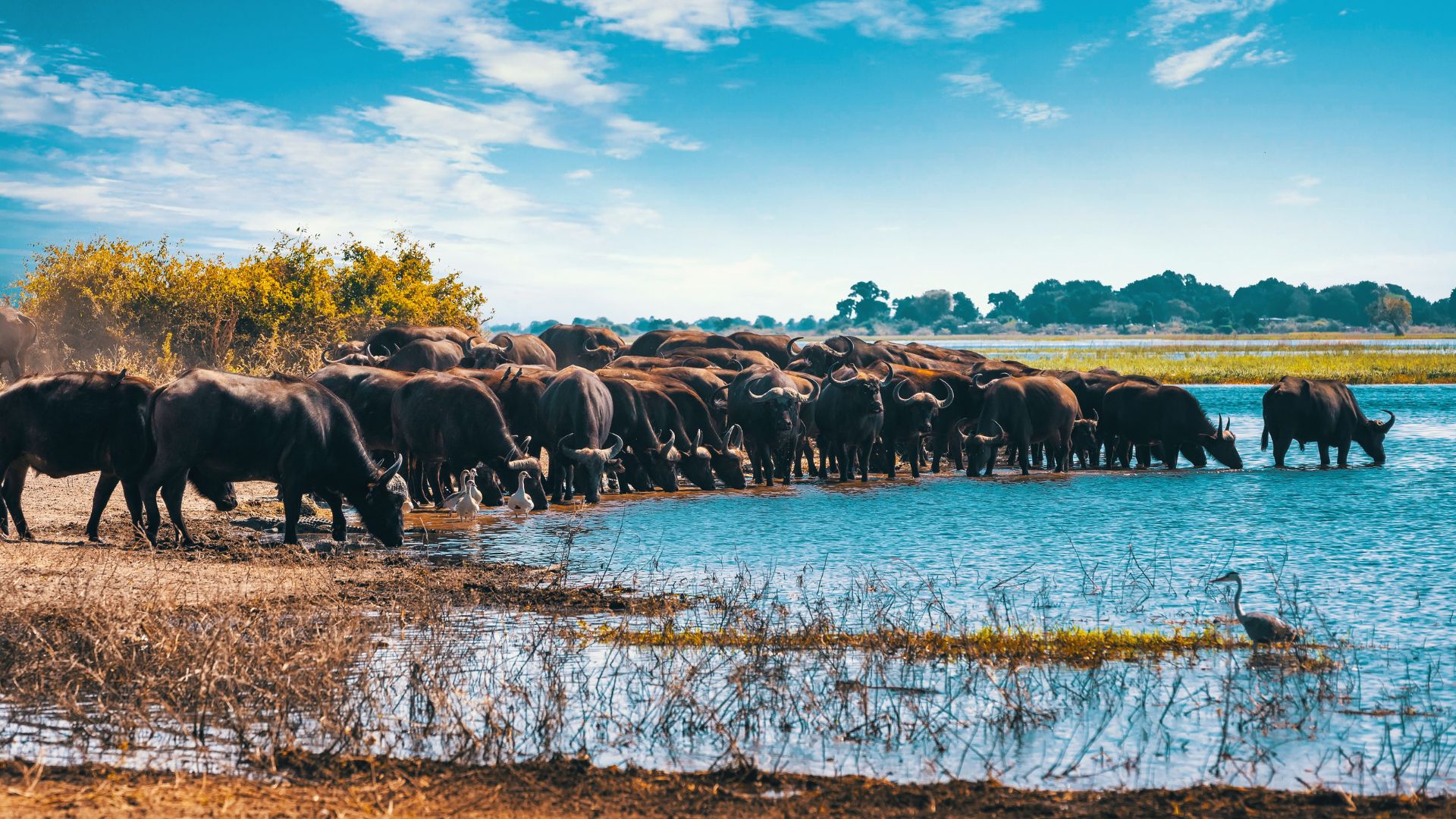
Nyerere supports an impressive variety of wildlife, including elephants, buffalo, giraffes, zebras, wildebeest, hippos and numerous antelope species. Lions are among the major predators, while leopards and spotted hyenas also occur throughout the wider ecosystem. The region is particularly significant for the endangered African wild dog, although these wide-ranging predators are naturally unpredictable and sightings can never be guaranteed. What makes wildlife viewing here distinctive is the setting. Animals are encountered among river systems, woodland and open clearings rather than across the vast grass plains associated with Serengeti.
THE AFRICAN WILD DOG
Few safari sightings generate quite the same excitement as African wild dogs.
Lean, social and constantly moving, wild dogs live and hunt in highly organised packs and can cover considerable distances in a relatively short period. Southern Tanzania remains an important stronghold for the species, making Nyerere one of the destinations where travellers may have an opportunity to encounter them.
Finding them requires luck.
Staying with them when they’re moving requires an excellent guide.
And once you’ve watched a pack disappear into the woodland, lions suddenly seem remarkably easy to follow.
SAFARI FROM THE WATER
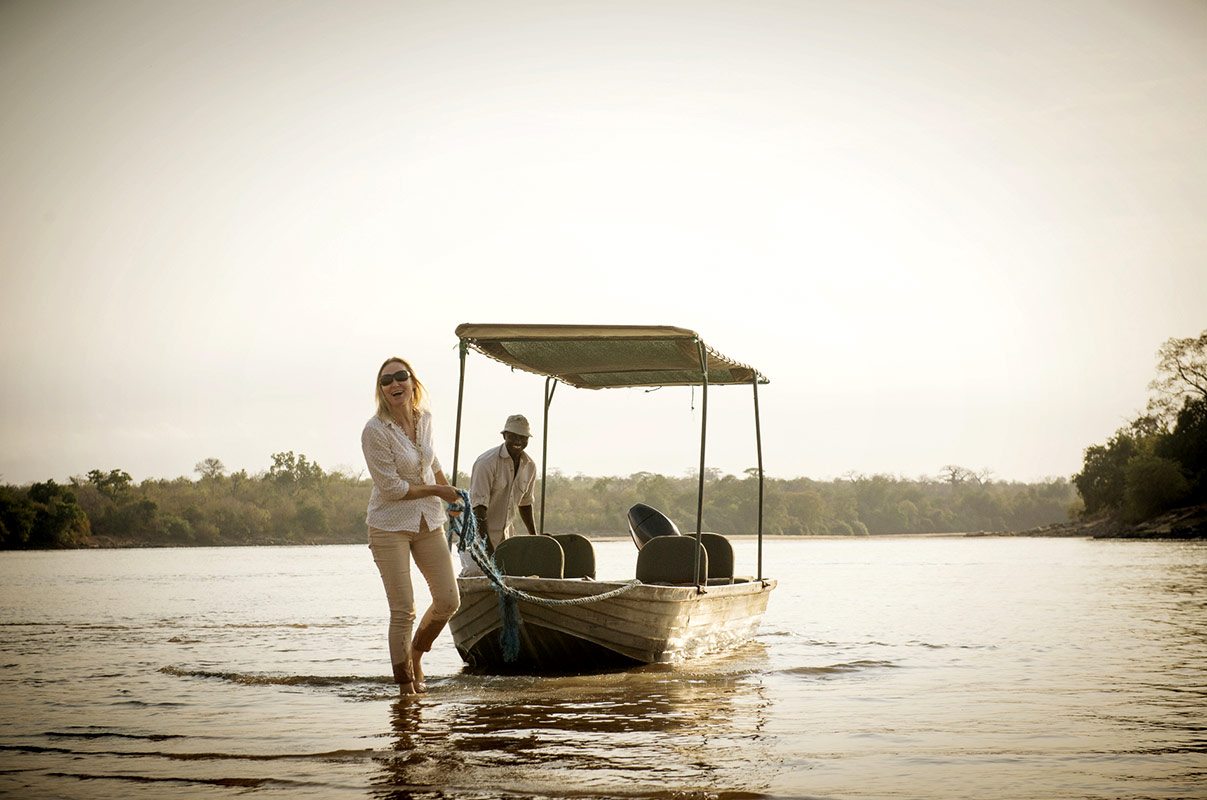
A boat safari is one of the experiences that separates Nyerere from the traditional northern circuit.
Rather than looking outward from a vehicle, you move slowly along waterways, watching wildlife gather at the river’s edge and birds move between reeds and overhanging branches.
Hippos grunt from the water.
Crocodiles disappear without warning.
Fish eagles call overhead.
And somewhere along the bank, an elephant may emerge from the trees.
The experience isn’t necessarily about finding the largest number of animals.
It’s about seeing the wilderness from another angle.
GAME DRIVES THROUGH THE SOUTH
Back on land, game drives explore a mixture of woodland, open areas, lakes and riverine habitats.
Because Nyerere covers an enormous area, safari activities are concentrated within accessible wildlife-viewing zones rather than attempting to cover the entire park.
Early mornings and late afternoons can be particularly rewarding as temperatures soften and animals become more active.
The landscape often feels less congested than Tanzania’s most famous northern parks, giving sightings a different atmosphere.
Sometimes there is another vehicle nearby.
Sometimes there isn’t.
A SAFARI WITH FEWER FOOTPRINTS
One of the strongest reasons to travel south is space.
Nyerere receives a different pattern of tourism from the Serengeti-Ngorongoro circuit. Camps and wildlife areas can feel more isolated, distances can be substantial and the overall experience often carries a stronger sense of being away from the main safari trail.
That doesn’t automatically make it “better” than northern Tanzania.
It makes it different.
And for travellers returning to Tanzania, photographers, honeymooners or anyone drawn to quieter wilderness, that difference can be exactly the point.
WHEN IS THE BEST TIME TO VISIT NYERERE?
The dry season, broadly from June through October, is particularly popular for wildlife viewing as vegetation becomes less dense and animals increasingly depend on permanent water sources. This can make the Rufiji River and surrounding lakes especially productive.
The greener months transform the landscape, bringing lush vegetation, dramatic skies and excellent birdlife. Rainfall can also affect roads, camp operations and accessibility in parts of southern Tanzania, so itinerary planning becomes particularly important during the wetter part of the year.
Rather than treating Nyerere as identical throughout the calendar, we recommend matching your travel dates with the activities and areas you most want to experience.
HOW LONG SHOULD YOU SPEND IN NYERERE?
We recommend three nights as a strong starting point, with four nights providing an even more relaxed experience.
The attraction of Nyerere is not simply completing a game drive and moving on. It is having enough time to experience the wilderness in different ways.
One morning might belong to the vehicle.
One afternoon to the river.
Another day might be spent exploring deeper into the wildlife areas.
With enough time, the safari stops feeling scheduled.
That’s when Nyerere gets interesting.
GETTING TO NYERERE
Nyerere can be incorporated into a southern Tanzania road itinerary or reached by scheduled light aircraft depending on your wider journey and current flight operations. Flying is particularly attractive when combining Nyerere with more distant southern destinations such as Ruaha or when connecting the safari with Zanzibar.
For Wildpack’s luxury southern itineraries, I would lean heavily into these bush-flight combinations.
ZANZIBAR ✈ NYERERE also has strong potential as a short safari extension for travellers already staying on the coast.
NYERERE WITH WILDPACK
Come south and change the rules.
Spend the morning following tracks through woodland.
Then put the vehicle away.
Take a boat onto the Rufiji.
Watch elephants appear at the water’s edge while hippos argue somewhere downstream.
Wait for sunset to turn the river copper.
Tomorrow, go looking for wild dogs.
Or don’t.
The river may have other plans.