
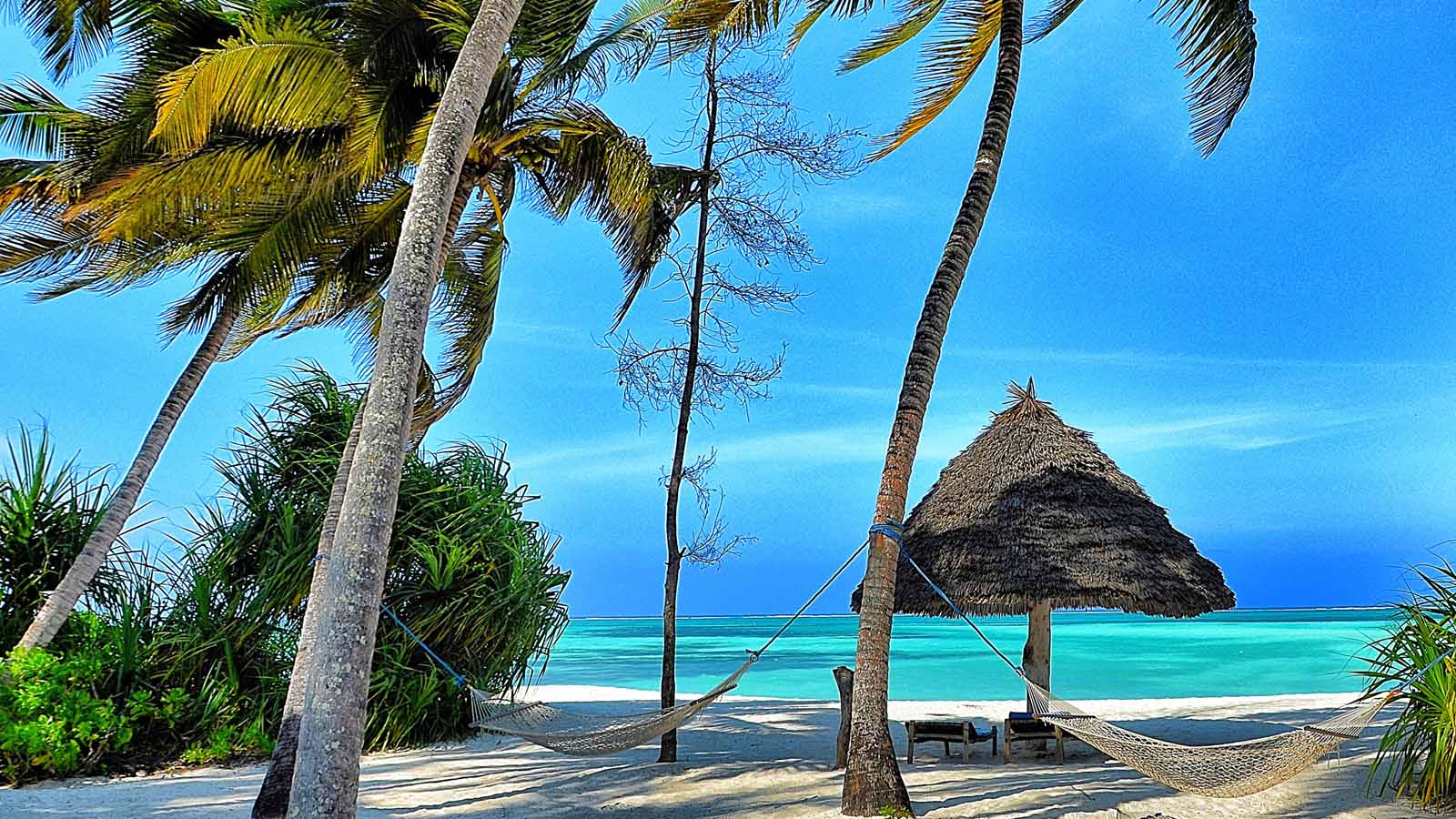
STONE TOWN: WHERE THE ISLAND TELLS ITS STORY
Stone Town is the cultural and historical heart of Zanzibar City, and the old quarter rewards exploration on foot.
Its streets twist between coral-stone buildings, carved wooden doors, mosques, markets and small shops. Around one corner you might find an ornate doorway; around another, children playing football in a narrow square or the scent of food drifting from a nearby kitchen.
The town reflects centuries of Indian Ocean trade and cultural exchange.
It is beautiful, complicated and deeply layered.
Rather than treating Stone Town as a quick photo stop between the airport and the beach, we recommend giving it time.
Walk.
Get slightly lost.
That’s part of it.
AN ISLAND BUILT AROUND THE OCEAN
The Indian Ocean shapes almost everything about Zanzibar.
Fishing boats leave coastal villages early in the morning. Dhows move across the horizon. Tides dramatically change sections of coastline, particularly along the eastern side of the island.
At low tide, the ocean can retreat far from shore.
Hours later, it returns.
That rhythm means choosing the right beach matters.
Some areas are excellent for long tidal walks and kiteboarding. Others offer conditions better suited to swimming through more of the day. Some are lively, with restaurants and nightlife nearby. Others are deliberately quiet.
There isn’t one “best beach in Zanzibar.”
There is a best coast for the way you want to travel.
NORTH ZANZIBAR
FOR SWIMMING, SUNSETS AND ENERGY.
The northern coastline around Nungwi and Kendwa is among Zanzibar’s best-known beach areas.
Compared with much of the eastern coast, tidal changes can be less dramatic for swimming in certain areas, making the north particularly attractive to travellers who want easy beach time.
Nungwi has more activity, restaurants, excursions and nightlife, while Kendwa can provide a slightly different resort atmosphere depending on where you stay.
This is where we’d generally steer travellers who say:
“I want beautiful water, swimming and things happening around me.”
EAST COAST
FOR SPACE, TIDES AND BAREFOOT DAYS.
The east coast has a different personality.
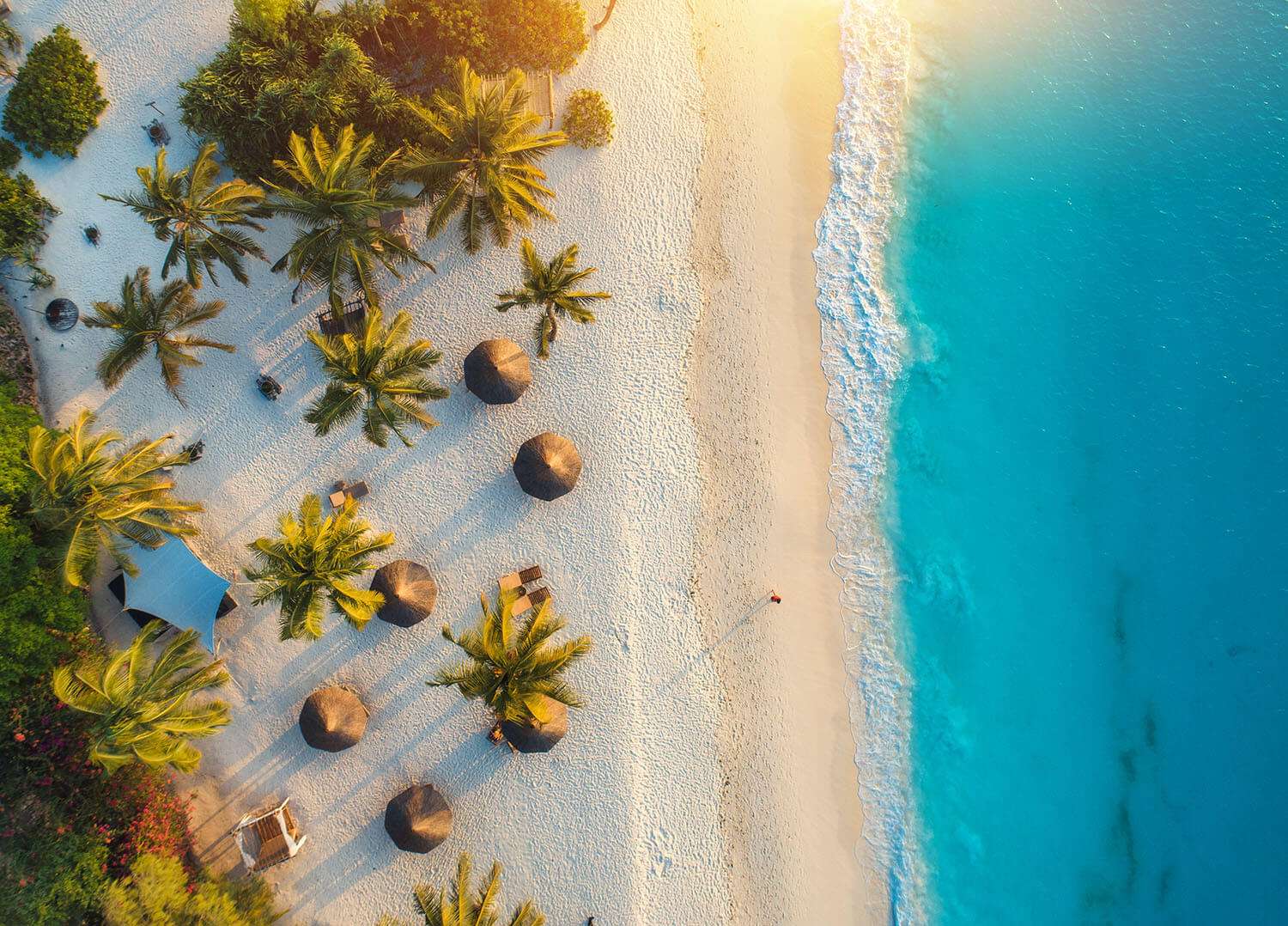
Areas such as Paje, Jambiani, Matemwe and surrounding coastal villages are shaped by wide tidal movements and long stretches of beach.
At low tide, the landscape can transform completely as shallow water retreats toward the reef.
Paje is particularly associated with kiteboarding and a younger, more active atmosphere, while other areas can feel quieter and more secluded.
This side of Zanzibar works beautifully for travellers who enjoy space, long beach walks and watching the ocean constantly redraw the shoreline.
THE SPICE ISLAND
Zanzibar’s association with spices remains an important part of its identity.
Cloves became particularly significant to the islands’ economy and history, while farms today may also grow vanilla, cinnamon, nutmeg, pepper, turmeric and tropical fruits.
A thoughtfully arranged spice experience can be surprisingly engaging.
Instead of simply seeing jars of finished spices, you encounter the plants themselves.
Smell a leaf.
Break a piece of bark.
Taste a fruit you’ve never seen before.
Suddenly the spice rack back home becomes considerably less boring.
JOZANI AND ZANZIBAR’S WILDER SIDE
Zanzibar’s wildlife story is quieter than mainland Tanzania’s, but it still exists.
The Jozani area protects important forest and wetland habitats and is particularly known for the Zanzibar red colobus, a primate found only in Zanzibar.
Walking through the forest offers a completely different environment from the beaches and Stone Town, while nearby mangrove ecosystems reveal another side of the island’s relationship with water.
You don’t come to Zanzibar for a conventional safari.
But the wild hasn’t completely left the island either.
OUT ON THE WATER
Some of Zanzibar’s best experiences begin where the land ends.
Depending on where you’re staying and the season, days can include dhow sailing, snorkelling, diving, sandbank visits, kayaking, fishing or simply heading onto the water near sunset.
The surrounding Indian Ocean contains coral reefs and diverse marine life, although conditions vary between locations and seasons.
For Wildpack, I would avoid packing every available excursion into the itinerary.
Give travellers options.
Then leave room for absolutely nothing.
A beach holiday needs blank spaces.
FOOD, MARKETS AND SWAHILI FLAVOURS
Zanzibar’s food carries the fingerprints of the island’s long history of trade.
Spices meet seafood.
Coconut appears everywhere.
Rice dishes, grilled fish, octopus, tropical fruits and Swahili flavours make eating part of the experience rather than something squeezed between excursions.
Stone Town is particularly good for exploring local food, from established restaurants to evening food stalls.
A Wildpack Zanzibar itinerary should therefore include at least one moment where the activity is simply:
Go somewhere interesting and eat.
That’s legitimate field research.
WHEN IS THE BEST TIME TO VISIT ZANZIBAR?
Zanzibar is a year-round destination, but weather patterns influence beach conditions and activities. The generally drier periods are particularly popular for beach holidays and combining Zanzibar with mainland safaris. Wetter periods can bring heavier tropical rainfall, while temperatures remain warm for much of the year.
The best timing also depends on what you want to do. Diving, snorkelling, kiteboarding and marine excursions can each be influenced by seasonal wind and sea conditions.
If Zanzibar forms part of a safari itinerary, we would plan the coast around the overall journey rather than treating the island as an isolated add-on.
HOW LONG SHOULD YOU SPEND IN ZANZIBAR?
We recommend four to six nights for most safari-and-beach journeys.
That creates enough time to combine Stone Town with the coast without turning every day into a transfer or excursion.
For a 5-night stay, for example:
1 night Stone Town + 4 nights beach
works beautifully.
Travellers wanting a slower honeymoon or dedicated island holiday can easily spend a week or more.
The goal isn’t to see all of Zanzibar.
It’s to stop checking the clock.
BUSH + BEACH
FROM SAFARI DUST TO BAREFOOT BLUE.
Zanzibar pairs naturally with Tanzania’s safari regions because scheduled and domestic flights can connect the island with several mainland gateways and safari areas.
For Wildpack, this deserves to become one of the site’s major journey styles:
SERENGETI ✈ ZANZIBAR
NYERERE ✈ ZANZIBAR
ARUSHA ✈ ZANZIBAR
Wake up listening to lions.
A few hours later, take your shoes off beside the Indian Ocean.
That’s a fairly convincing Tuesday.
ZANZIBAR WITH WILDPACK
We wouldn’t send everyone to the same beach.
Tell us what you’re looking for.
A honeymoon hideaway?
Swimming and cocktails?
Kitesurfing and beach bars?
A quiet villa?
Stone Town and food?
Five days of doing impressively little?
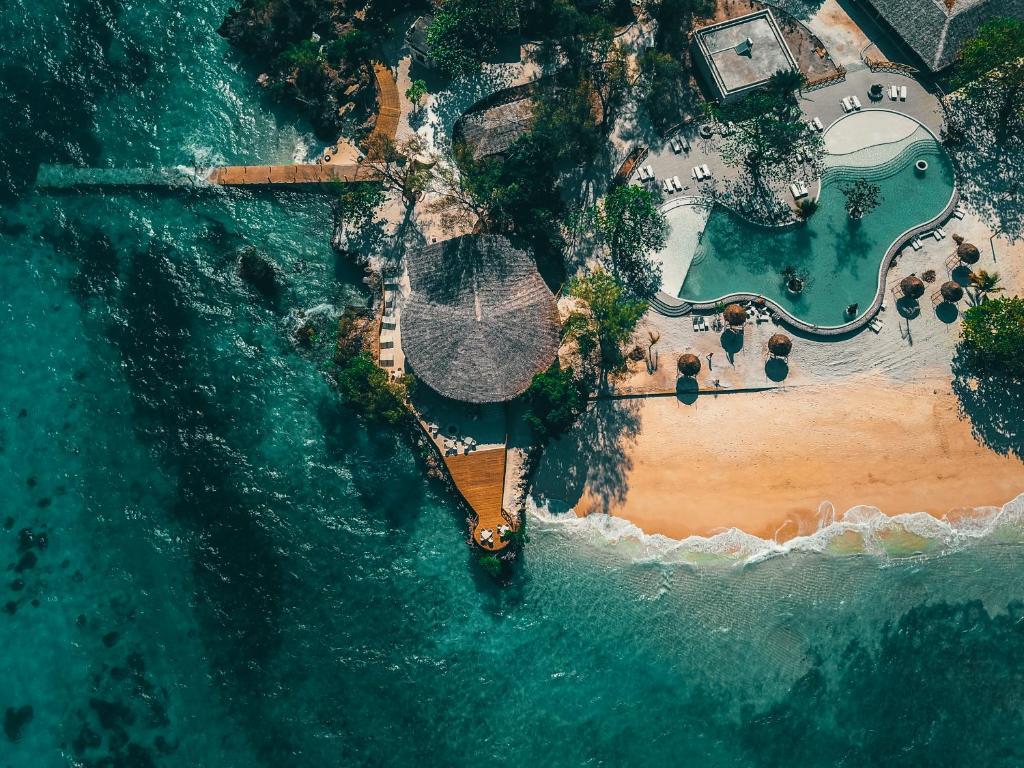
We’ll match the coast, hotel and pace to the traveller rather than squeezing everyone into the same Zanzibar template.
Because after twelve days of safari schedules, sometimes the most luxurious itinerary is the one with nothing written on it.