THE ROOF OF AFRICA
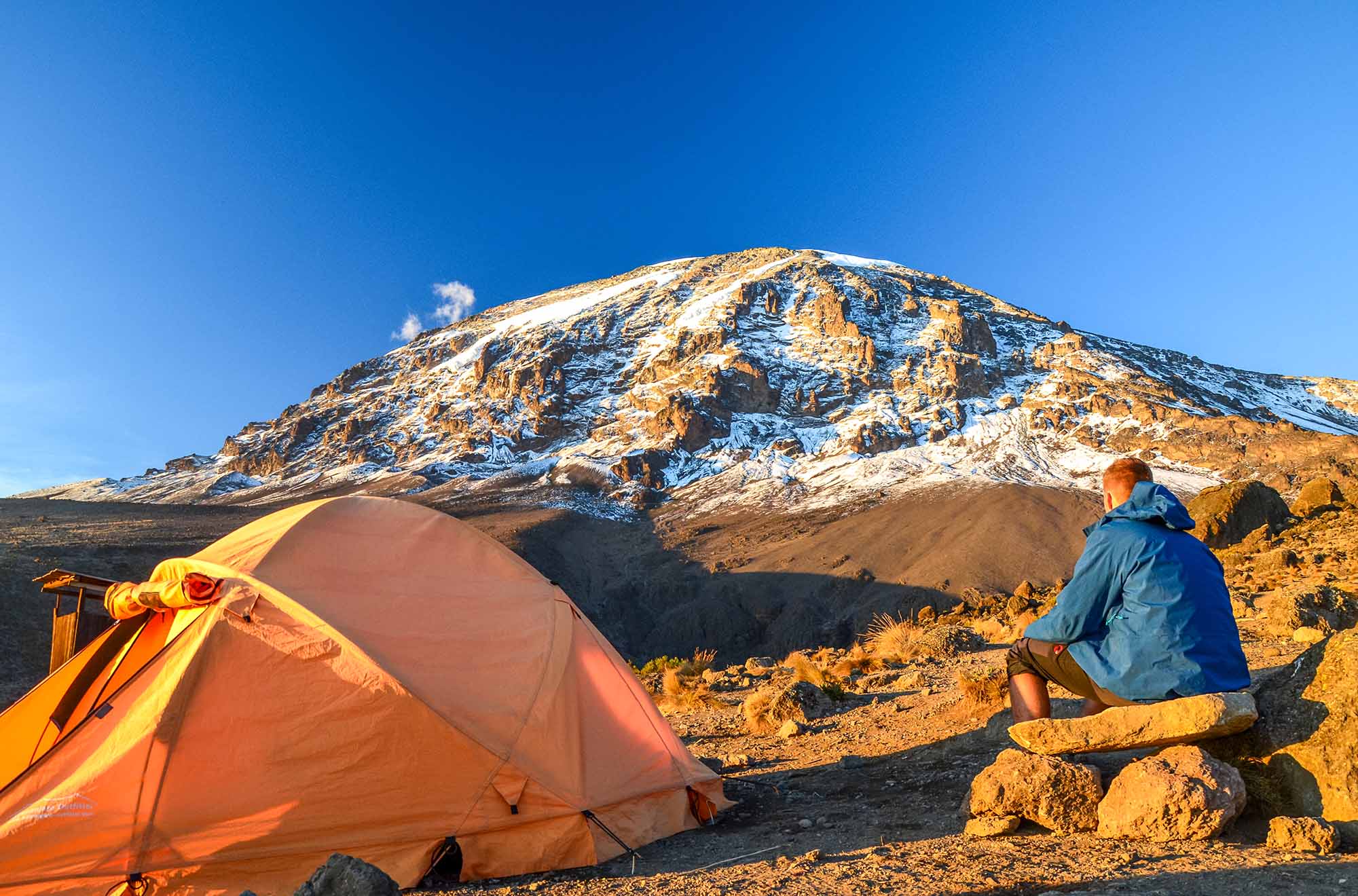
Kilimanjaro stands almost alone above the plains of northern Tanzania.
Unlike mountains hidden inside enormous ranges, its scale is remarkably visible. From lower elevations, the mountain can appear suddenly above the clouds, its upper slopes seemingly disconnected from the landscape beneath them.
Kilimanjaro is formed by three volcanic cones: Shira, Mawenzi and Kibo. Uhuru Peak sits on Kibo and marks the mountain’s highest point.
But standing at the summit is only the final line of the story.
Most of Kilimanjaro happens below it.
FROM RAINFOREST TO HIGH-ALTITUDE DESERT
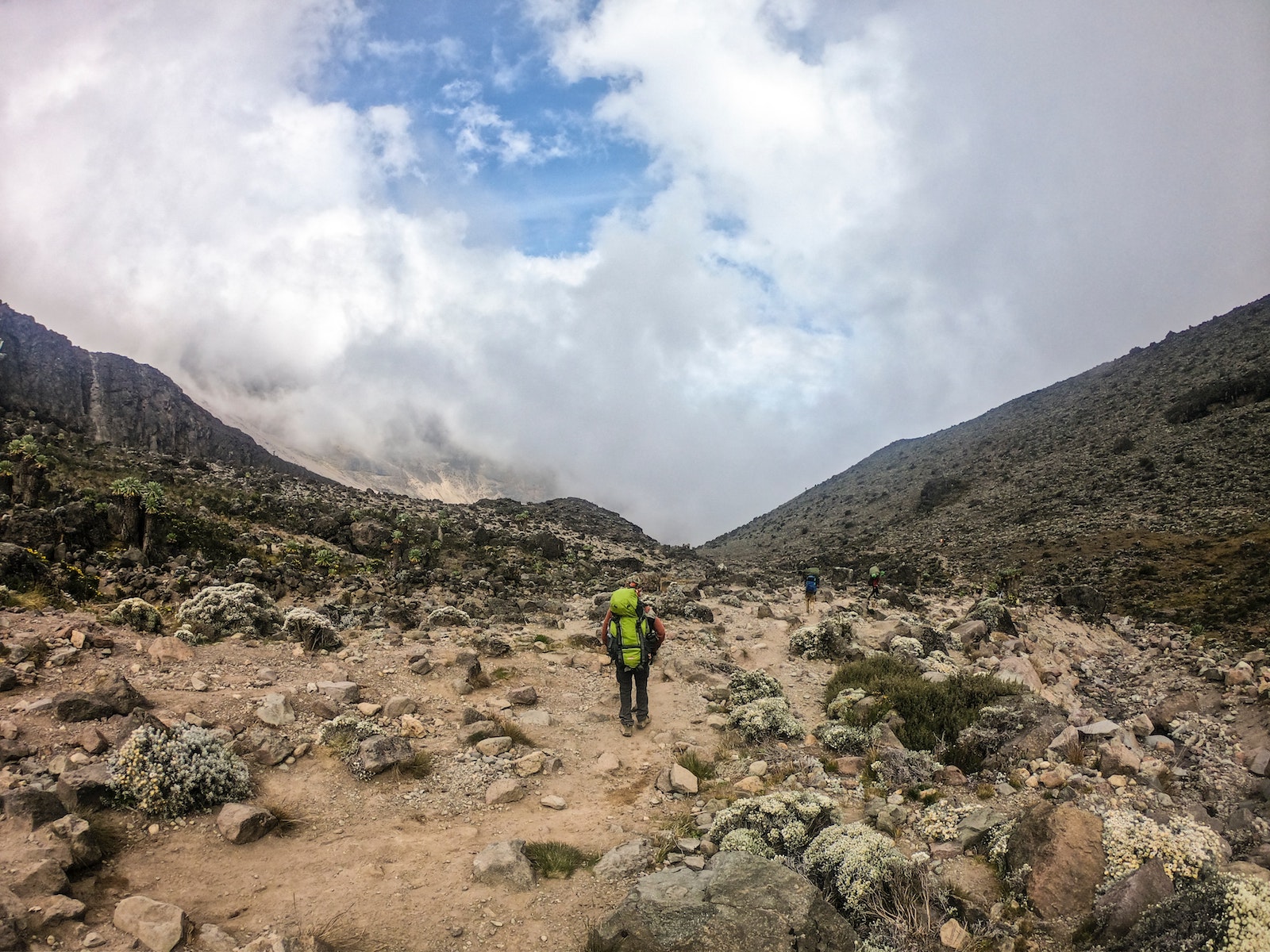
One of the most fascinating parts of climbing Kilimanjaro is watching the environment transform as altitude increases.
The lower mountain passes through lush montane forest where monkeys and colourful birds may be encountered among dense vegetation.
Higher up, forest gives way to heath and moorland.
Vegetation becomes shorter.
Temperatures fall.
The landscape opens.
Eventually you enter the stark alpine desert of the upper mountain, where rock, dust and enormous skies dominate the trail.
By summit night, almost everything familiar has disappeared.
You’re walking through darkness, cold and thin air toward the highest point in Africa.
THE SUMMIT
5,895 METRES ABOVE SEA LEVEL.
Most summit attempts begin during the night.
Headlamps form a slow line across the mountain as climbers move upward in darkness, taking deliberately small steps while guides manage the pace.
It is cold.
It is tiring.
And altitude makes even simple movement feel considerably more expensive.
Then the horizon begins changing.
Black becomes blue.
Blue becomes orange.
And somewhere above the clouds, Africa wakes up beneath you.
Reaching Uhuru Peak is the objective.
But earning those final metres is what gives the summit its meaning.
YOU DON’T NEED TO BE A MOUNTAINEER
Standard Kilimanjaro trekking routes do not normally require technical climbing skills, ropes or specialist mountaineering experience.
That accessibility is one reason the mountain attracts trekkers from around the world.
But “non-technical” does not mean easy.
The greatest challenge is altitude.
Your body needs time to adapt as oxygen availability decreases, which is why route length and acclimatisation matter enormously when choosing a Kilimanjaro itinerary.
Fitness helps.
Determination helps.
But neither replaces acclimatisation.
CHOOSE YOUR WAY UP
Rather than presenting the routes as interchangeable, this should become one of the strongest sections on the page.
01 / LEMOSHO
THE WILDPACK FAVOURITE.
8 DAYS · EXCELLENT ACCLIMATISATION · SCENIC
A longer approach with varied landscapes and a gradual itinerary, making it our preferred option for many first-time Kilimanjaro climbers.
02 / MACHAME
THE CLASSIC ADVENTURE.
7 DAYS · SCENIC · CAMPING
One of Kilimanjaro’s best-known routes, combining beautiful scenery with a strong acclimatisation profile when climbed over seven days.
03 / MACHAME
THE FASTER CLIMB.
6 DAYS · CHALLENGING · CAMPING
The same mountain with less time to adapt. Better suited to appropriately prepared trekkers comfortable with a faster itinerary.
04 / RONGAI
TAKE THE QUIETER SIDE.
7 DAYS · NORTHERN APPROACH · CAMPING
Approach Kilimanjaro from the north through quieter landscapes before crossing the mountain and descending toward Marangu.
05 / MARANGU
THE HUT ROUTE.
6 DAYS · MOUNTAIN HUTS · CLASSIC
Kilimanjaro’s best-known hut-based route, offering dormitory-style mountain accommodation instead of sleeping in tents.
WHICH KILIMANJARO ROUTE SHOULD YOU CHOOSE?
There isn’t one perfect route for every climber.
If you want more acclimatisation time and a beautifully varied approach, we’d generally start the conversation with 8-Day Lemosho.
If you want a classic camping route with excellent scenery, consider 7-Day Machame.
If avoiding tents matters, Marangu becomes particularly interesting.
If you’d prefer a quieter northern approach, look toward Rongai.
And if price or available time is pushing you toward a shorter itinerary, we’d rather explain the compromises than simply sell you the quickest route.
On Kilimanjaro, an extra day isn’t wasted time.
It can be one of the most valuable things you pack.
ALTITUDE CHANGES THE RULES
Kilimanjaro’s summit sits at extreme altitude, and altitude sickness can affect anyone regardless of age, strength or fitness.
Our mountain itineraries therefore need to prioritise sensible pacing, hydration, acclimatisation and communication with the guiding team.
Climbers should be honest about headaches, nausea, dizziness, unusual fatigue or other symptoms rather than trying to hide them to protect their summit attempt.
The mountain will still be there.
Your safety comes first.
THE PEOPLE BEHIND EVERY SUMMIT
Nobody climbs Kilimanjaro alone.
Behind each successful trek is a mountain crew carrying equipment, preparing camps or huts, cooking meals, managing logistics and guiding climbers safely through changing terrain and altitude.
Guides monitor how the group is adapting.
Cooks somehow produce hot meals halfway up a mountain.
Porters carry the infrastructure that makes the expedition possible.
Wildpack’s Kilimanjaro experience should therefore never be marketed purely around the person standing beside the summit sign.
The climb belongs to the team.
WHEN IS THE BEST TIME TO CLIMB KILIMANJARO?
Kilimanjaro can be climbed throughout much of the year, but weather conditions vary considerably with the seasons and altitude.
The generally drier periods are popular because trails can be easier and there may be better opportunities for clear mountain views. Wetter periods can bring mud and rain at lower elevations and snow or difficult conditions higher on the mountain.
Mountain weather remains unpredictable regardless of season.
Sunshine at the gate doesn’t guarantee sunshine at 5,000 metres.
Pack for the mountain, not the forecast in Moshi.
HOW FIT DO YOU NEED TO BE?
You don’t need to be an elite athlete.
You do need endurance.
Long walks, hills, stair climbing and regular cardiovascular training can help prepare your body for consecutive trekking days.
Just as important is becoming comfortable walking slowly for extended periods.
Kilimanjaro has a useful Swahili lesson for anyone accustomed to rushing:
Pole pole.
Slowly, slowly.
On this mountain, slower can take you higher.
KILIMANJARO WITH WILDPACK
We don’t want to sell you the shortest route to a summit photograph.
We want to choose the route that makes sense for your time, experience, comfort and expectations.
Then we climb slowly.
Eat properly.
Listen to the guides.
Watch the landscape disappear beneath us.
And when summit night arrives, we put one boot in front of the other until either the mountain says yes or safety says stop.
Both decisions deserve respect.